

Why Am I So Much Harder on Myself Than on Anyone Else?
Explore why you’re tougher on yourself than others, through your Blueprint and inner critic patterns, with practical ways to cultivate self-compassion.
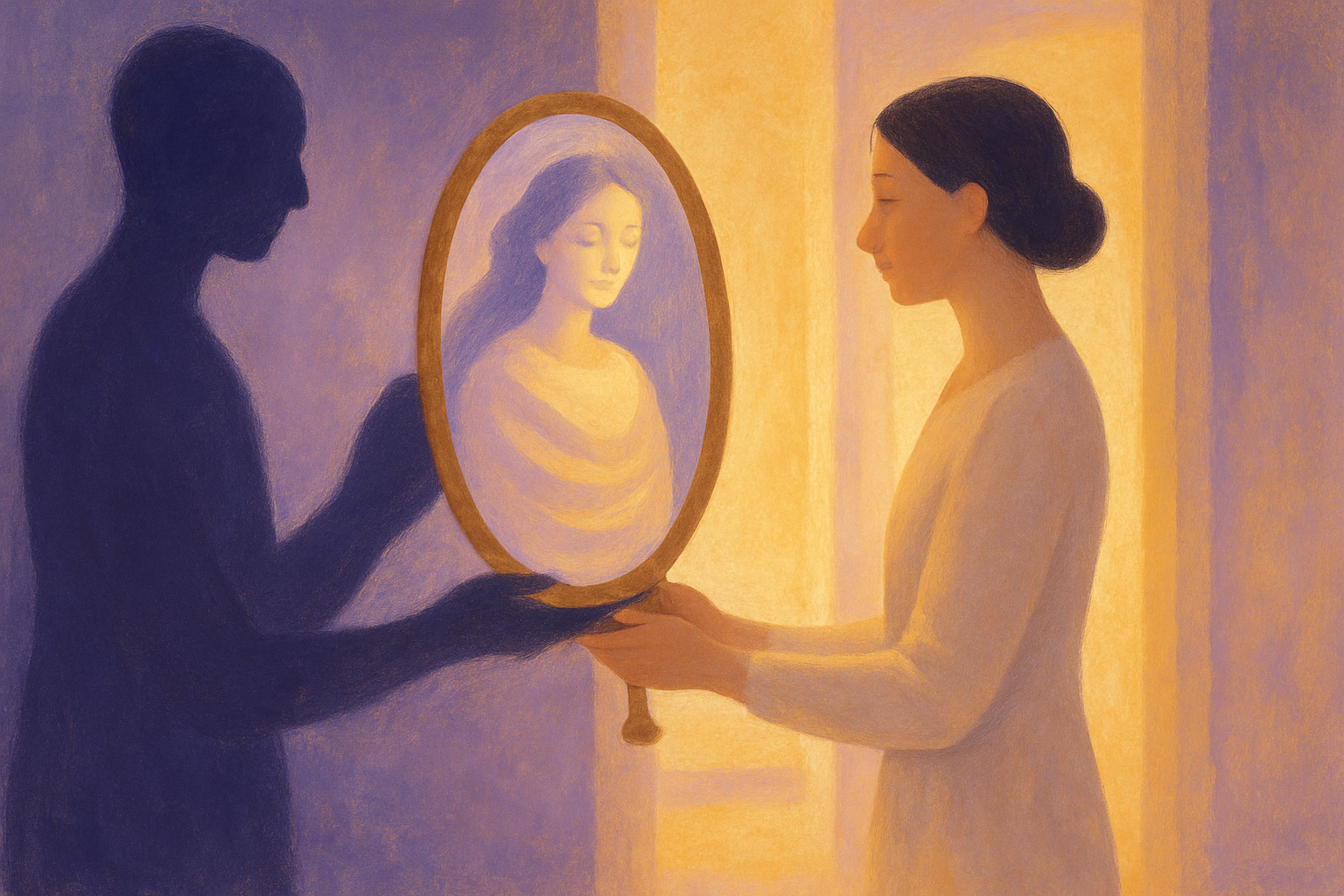
If you often find yourself holding yourself to standards that feel impossibly high, replaying your mistakes long after others have moved on, you’re encountering a very common, yet deeply personal, inner dynamic. Why am I harder on myself than on anyone else? The short answer is that your inner critic is calibrated by your unique Blueprint—patterns from systems like the Enneagram, Western astrology, and numerology—that set the bar for yourself differently than for others.
Recognizing this is the first step toward loosening the grip of harsh self-judgment and cultivating a kinder, more constructive inner dialogue.
Why do I replay my mistakes more than others'?
It’s normal to forgive others quickly while ruminating on your own errors. This happens because your mind is wired to protect your identity and growth trajectory. Your Blueprint—especially Enneagram patterns and Saturn themes in Western astrology—shapes how you process mistakes. For example, an Enneagram Type One often holds an exacting internal standard, while Saturn’s influence can emphasize responsibility and discipline, which can translate into self-criticism when expectations aren’t met.
Numerology adds another layer, with certain life path numbers encouraging perfectionism or heightened self-awareness. The key is that these systems don’t just describe traits; they show how your inner voice is tuned to hold you accountable, sometimes too harshly.
How does the inner critic fit into my Blueprint?
Your inner critic is not just a negative voice but a complex mechanism shaped by your entire Cosmic Blueprint. For instance, Human Design’s definition of your inner authority can influence how you evaluate yourself, while BaZi’s elemental interactions might reveal where you tend to be most self-demanding. The I Ching’s hexagrams that resonate with your birth data often highlight recurring challenges or lessons, including how you handle imperfection.
Understanding these patterns helps you name the inner critic kindly—as a part of your Blueprint trying to keep you aligned and safe, albeit sometimes too rigidly.
What practical steps help loosen harsh self-judgment?
Awareness of your Blueprint enables targeted practices to cultivate self-compassion:
- Identify your inner critic’s voice: Is it the Enneagram One’s perfectionism, Saturn’s stern responsibility, or a numerology-driven inner standard? Naming it reduces its unconscious power.
- Reframe mistakes as growth signals: Use your Blueprint’s strengths to view errors as data, not disasters. For example, an Enneagram Four might channel self-reflection into creative growth rather than shame.
- Practice compassionate self-inquiry: Ask yourself, “What would I say to a friend in this situation?” and apply that tone inwardly.
- Use your Blueprint’s supportive tools: If you follow Human Design, experiment with your strategy and authority to make decisions that reduce self-doubt. Explore numerology cycles to understand when self-criticism peaks and plan gentle self-care accordingly.
These steps are not quick fixes but ongoing conversations with yourself, informed by the rich insights your Blueprint offers.
How do different systems compare on self-criticism?
The Enneagram highlights internal motivations and fears behind the inner critic, often linked to childhood patterns and emotional needs. Western astrology’s Saturn themes emphasize external responsibility and discipline, sometimes experienced as an internalized taskmaster. Numerology focuses on life path tendencies toward perfectionism or self-awareness.
By synthesizing these perspectives, you gain a nuanced understanding of why your inner critic sounds the way it does, making it easier to respond with intention rather than reaction.
FAQ
Is it normal to be harder on myself than others?
Yes, many people experience this. Your Blueprint often sets higher internal standards as a way to foster growth, even if it feels harsh.
Can my inner critic ever be helpful?
Absolutely. The inner critic can guide you toward accountability and improvement when it’s balanced with self-compassion.
How can I tell if my self-criticism is too much?
If it leads to paralysis, shame, or a sense of unworthiness rather than motivation, it’s likely too harsh and worth addressing with your Blueprint’s insights.
Where can I learn more about using my Blueprint to manage self-judgment?
Explore our Blueprints and the Enneagram system pages for deeper guidance, or try our quiz to start understanding your unique inner landscape.
Being kinder to yourself starts with understanding the story your Blueprint tells about your inner critic.
Want clarity on your direction right now?
Explore the Life Purpose Blueprint — a personalized reading that helps you identify your thread, name what drains you, and choose a direction that fits this chapter.
Explore the Life Purpose Blueprint →