

Why Does Reading About Myself Feel Like Being Found Out?
Discover why reading your personality descriptions feels like being found out and how to use your Blueprint as a mirror, not a box.
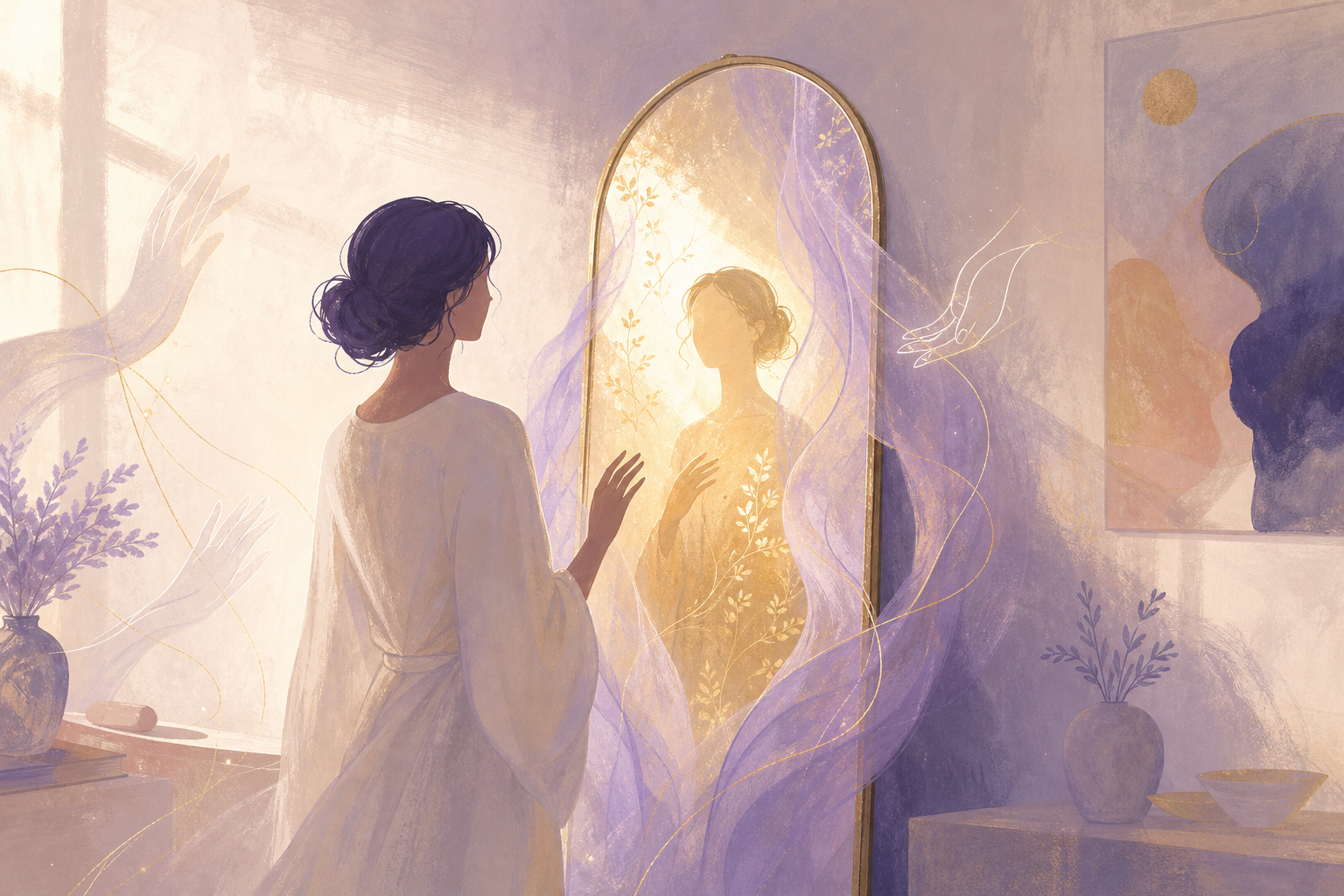
It’s common to feel a mix of relief and vulnerability when you read a personality description that seems to capture your essence perfectly. That sensation of being "found out" arises because these descriptions—whether from Western astrology, the Enneagram, Human Design, or numerology—hold a mirror to parts of yourself you may have only sensed or partially understood.
At the core, your Blueprint is a precise map of your tendencies, motivations, and patterns. Recognizing yourself in these systems can feel exposing because it touches on vulnerabilities, insecurities, or behaviors you might have tried to hide or rationalize away. But this recognition is not about being trapped or boxed in—it’s about gaining clarity and self-understanding.
Why does this keep happening when I read about myself?
The feeling of being "found out" happens because these systems synthesize complex information about your personality and life patterns in a way that resonates deeply. They articulate what you’ve experienced internally but may have struggled to express. This can trigger a strong emotional response, especially if the description highlights areas where you feel sensitive or uncertain.
For example, the Enneagram often reveals core fears and defense mechanisms, while Human Design uncovers decision-making strategies and energy dynamics. These insights can feel like someone has stepped inside your mind and heart, which is why it feels so intense.
Is it normal to feel vulnerable or defensive when I recognize myself in these descriptions?
Absolutely. Vulnerability signals that you are confronting truths that matter. It’s a natural part of self-recognition. When a description resonates, it can also challenge your self-image or the story you tell yourself about who you are. This can trigger defensiveness or discomfort as you adjust to new perspectives on your identity.
Understanding this emotional reaction as part of the process helps you move from resistance toward acceptance. Your Blueprint is not a judgment or a limit; it’s a tool for self-awareness and growth.
How can I use this recognition as a mirror rather than a box?
Using your Blueprint as a mirror means seeing these descriptions as reflections that help you understand your patterns without confining you to fixed identities. Here are some practical steps:
- Pause and reflect: When a description hits home, take a moment to notice your feelings and thoughts without rushing to conclusions.
- Ask questions: What parts feel true? What feels off? How do these insights connect to your lived experience?
- Experiment: Use your Blueprint to guide small changes in behavior or perspective, observing what feels authentic and empowering.
- Integrate multiple systems: Your Blueprint is a synthesis—combining insights from Western astrology, Enneagram, Human Design, and numerology offers a richer, more nuanced picture.
Recognition is the first step toward self-understanding, not a verdict on your potential.
What’s the difference between self-recognition and being boxed in?
Self-recognition acknowledges complexity and change. Being boxed in reduces you to a stereotype or fixed label. The Blueprint invites you into a dynamic relationship with yourself, highlighting potential for growth and choice rather than limitation.
For example, a Human Design profile might describe how you best make decisions, but it doesn’t dictate every choice you make. Similarly, the Enneagram points to habitual patterns but also to paths of transformation.
FAQ
Can my Blueprint change over time?
Your core Blueprint, based on birth data, remains consistent, but your understanding and integration of it evolve. Life experiences and conscious work can shift how you express your traits.
Why do some descriptions feel more accurate than others?
Each system highlights different aspects of your personality. Some may resonate more depending on your current focus or emotional state. Exploring multiple systems enriches your self-view.
How do I avoid feeling stuck in a description?
Remember that descriptions are tools, not rules. Use them to increase awareness and experiment with new behaviors. Your Blueprint supports growth, not confinement.
Where can I learn more about using my Blueprint effectively?
Explore our guide to using your Blueprint and visit the Synthesis page to see how different systems work together for practical self-knowledge.
Feeling "found out" is a sign that your Blueprint is working—inviting you to deeper, kinder self-understanding.
Want clarity on your direction right now?
Explore the Life Purpose Blueprint — a personalized reading that helps you identify your thread, name what drains you, and choose a direction that fits this chapter.
Explore the Life Purpose Blueprint →